
Magnetic Surveys for the Assessment of Sulfide Mineralization Potential in a Target Area, Nain County, Isfahan Province, Iran
Project Leader: Dr. Mehdi Mohammadi Vizheh
Client: Zaryab Negareh Kourosh Co.
Year: 2025
Magnetic surveys were carried out in the study area to delineate geological units, identify hydrothermal alteration zones, detect faults and fracture systems, and evaluate areas with potential for sulfide mineralization.
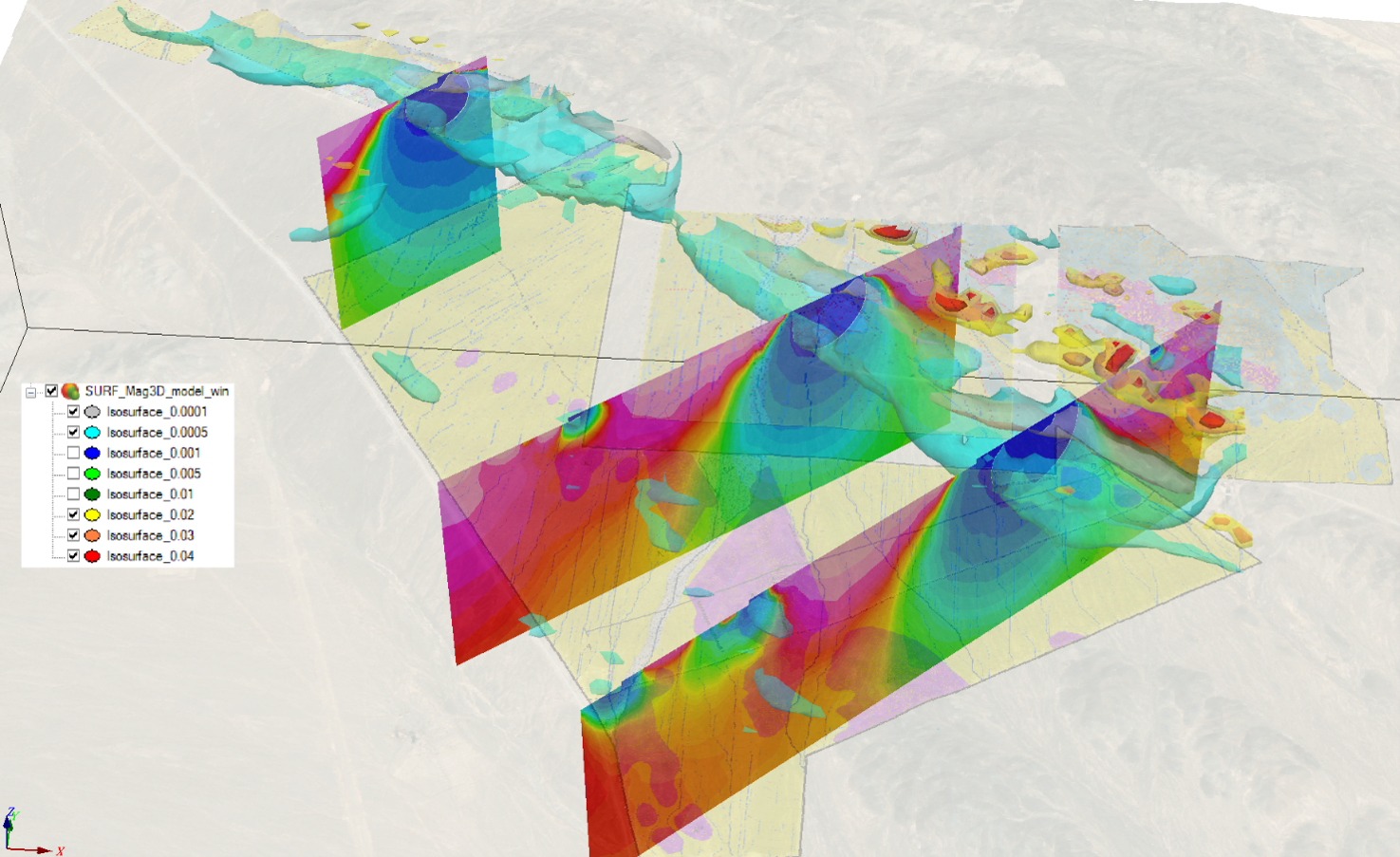
The results of the magnetic investigations, including magnetic anomaly maps and three-dimensional inversion models, show excellent agreement with magnetic susceptibility measurements obtained from rock units as well as with field geological observations. Fresh, unaltered andesitic lava flows exhibit relatively high magnetic susceptibility, whereas rhyolitic units that have experienced only limited alteration are characterized by moderate to low magnetic susceptibility. The results indicate that both the type and intensity of hydrothermal alteration—predominantly argillic, phyllic, and iron oxide alteration—have played a major role in reducing the magnetic properties of the igneous rocks. During interaction between hydrothermal fluids, mainly acidic in composition, and the host rocks (andesite and rhyolite), iron-bearing minerals, particularly magnetite, are progressively destroyed and replaced by non-magnetic alteration minerals such as pyrite, kaolinite, and sericite. Consequently, zones characterized by low to moderate magnetic intensity are interpreted as areas of intense hydrothermal alteration, particularly phyllic, argillic, and silicic alteration, and therefore represent favorable targets for sulfide mineralization.
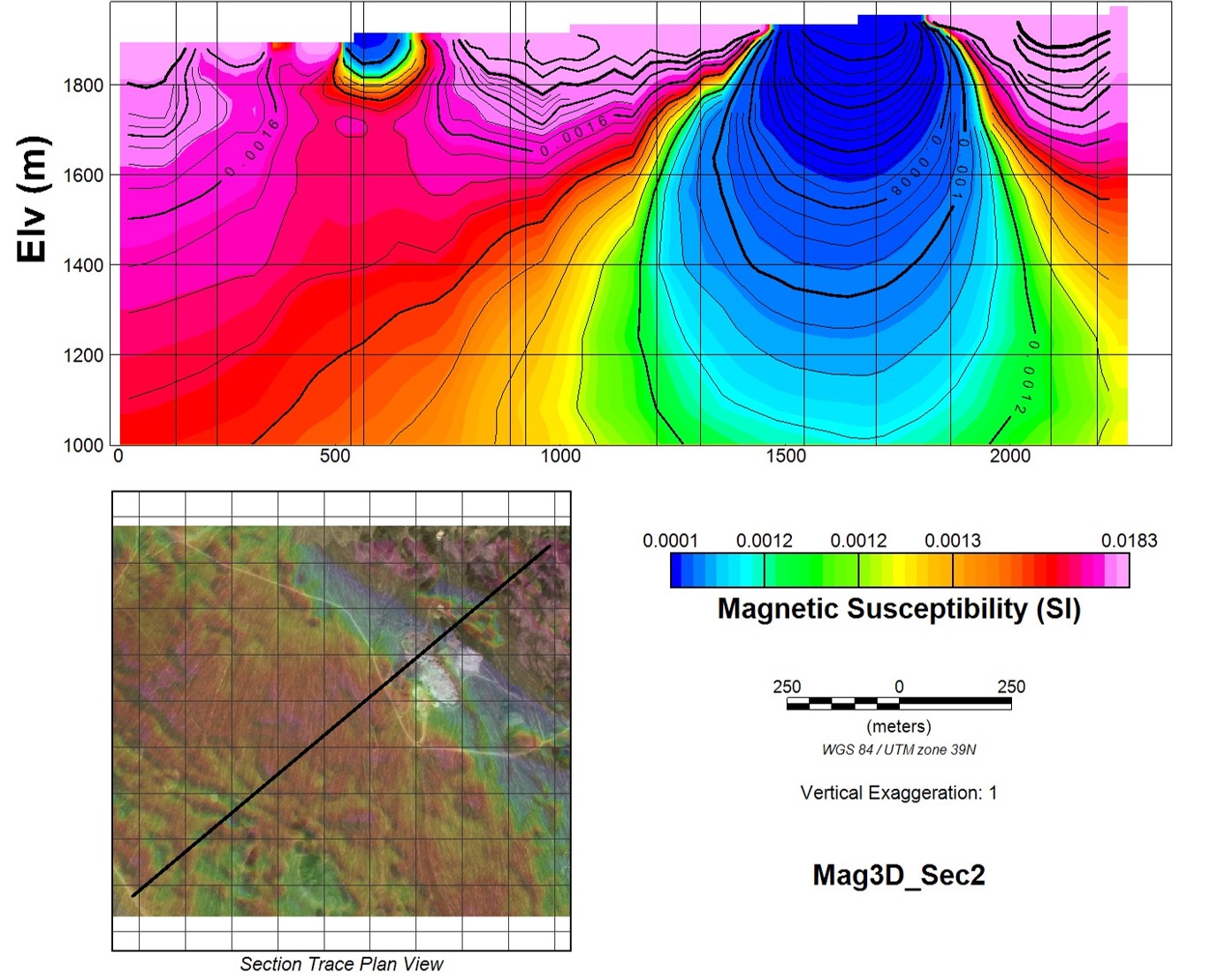
Linear zones exhibiting very low magnetic susceptibility (less than 0.0005 SI) coincide with the active kaolin mining pits and are interpreted to reflect intense hydrothermal alteration, predominantly of argillic and phyllic types, affecting the volcanic host rocks. In several locations, these low-susceptibility zones extend to depths of approximately 300 m, whereas magnetic susceptibility increases at greater depths. This trend suggests a transition in the alteration regime and may indicate the presence of concealed granitic to granodioritic intrusive bodies at depth. Considering the high potential for an epithermal–porphyry mineral system within the area, this target has been identified as the primary priority for future Induced Polarization–Resistivity (IP–RS) investigations.
Sending comments for this product is not allowed.