
New applied research (environmental geology - isotopics, etc.)
Department Manager: Dr. Morteza Talebian
Related Professors: Dr. Hamid Nazari - Dr. Alireza Vaezi - Dr. Mohammadreza Sheikh-ul-Islami - Dr. Majid Pourkerman
Introduction
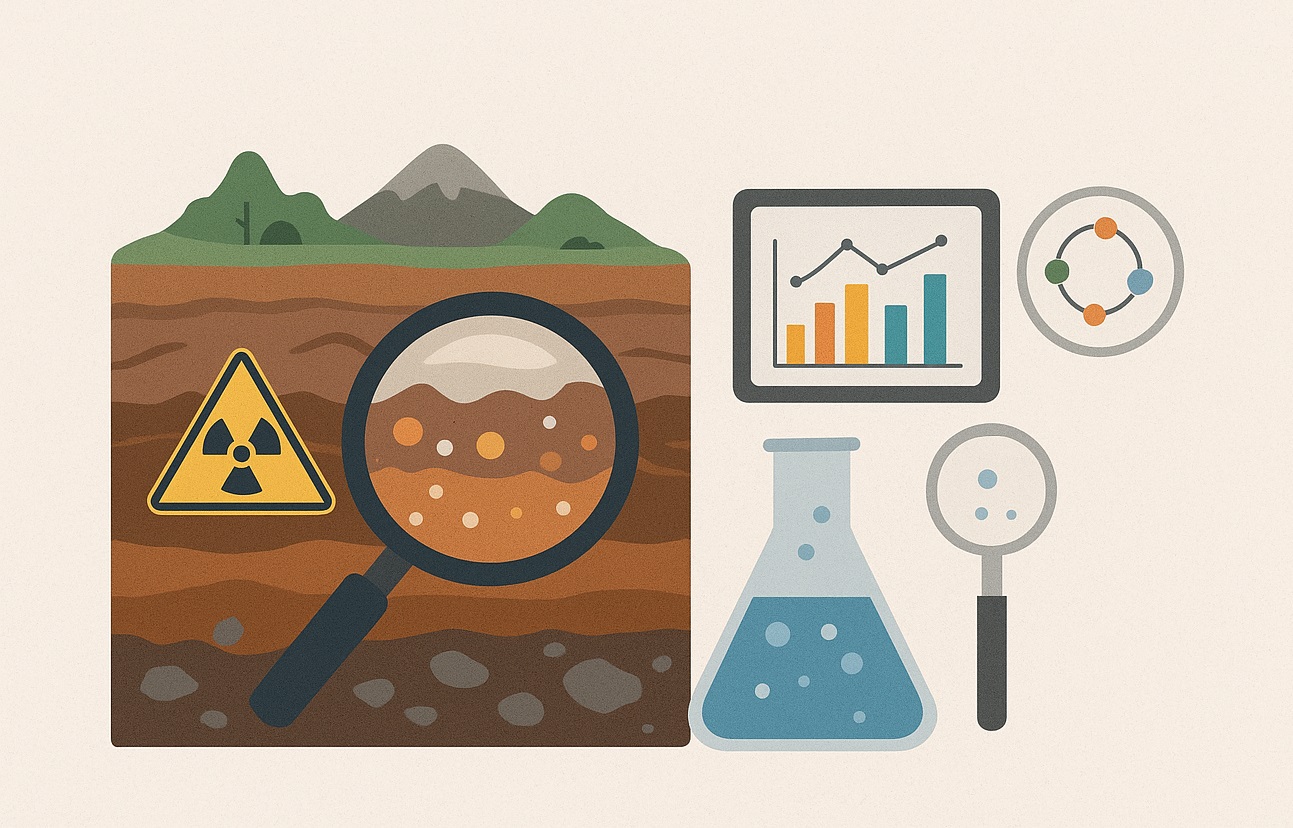
Environmental and Isotopic Geology is one of the most advanced and interdisciplinary branches of Earth Sciences that combines the principles of geology, chemistry, biology, and physics to study the complex interactions between the Earth and its biological systems. This group focuses on using modern tools, especially stable and unstable isotope systems, as powerful tracers to understand biogeochemical processes, identify the origin of pollution, reconstruct paleoclimate conditions, and purify the environment. The main goal is to provide scientific and technological solutions to detect, monitor, and solve complex environmental challenges of the present era, from local to global scales.
Tasks and Objectives of the Environmental and Isotopic Geology Research Group
- Origin identification and tracking of pollution: Use of isotopes of heavy metals (such as lead, mercury, zinc), trace elements and stable isotopes (such as carbon-13, nitrogen-15, oxygen-18, sulfur-34) to accurately identify the source of pollution in soil, groundwater and surface water, air and sediments.
- Environmental geochemistry: Study of the behavior, distribution and fate of natural and anthropogenic pollutants (metals, organic materials, radioactive materials) in different geological environments and assess their risks to the ecosystem and human health.
- Isotopic hydrogeology: Use of environmental isotopes (tritium, carbon-14, oxygen-18, deuterium) to determine the age, origin, flow paths and residence time of groundwater, sustainable management of water resources and investigation of the connection between surface and groundwater.
- Bioremediation & Georemediation: Development and evaluation of novel methods for remediating contaminated soil and water using biological (e.g. bacteria), chemical and geological processes.
- Paleoclimatology and paleoecology: Reconstruction of past climate and environmental conditions (e.g. temperature, precipitation, atmospheric CO₂ levels) using isotopic and geochemical evidence in natural archives such as lake and marine sediments, cave paintings (speluts) and tree rings.
- Global element cycles: Study of biogeochemical cycles of key elements such as carbon, nitrogen and sulphur in the oceans, soil and atmosphere using isotopic markers, to understand climate change and the impact of human activities.
- Applied organic geochemistry: The study of persistent organic pollutants (e.g., petroleum hydrocarbons, pesticides, dioxins) and the use of specific isotopes (e.g., total organic carbon isotopic composition) to track them.
- Environmental and health risk assessment: Combining geochemical and isotopic data with transport and exposure models to quantitatively assess the risks of pollutants to humans and ecosystems.
- Advanced processing and modeling of isotopic and environmental data: Using specialized software and multivariate statistical methods to interpret complex data sets and develop conceptual and quantitative models.
- Empowering researchers: In the use of advanced laboratory techniques (e.g., inductively coupled plasma mass spectrometry-compartmentation, isotope ratio mass spectrometry) and in the design of targeted field studies.
- Development and application of new analytical methods: in various isotopic fields (unconventional isotope sequencing, trace element analysis) to answer emerging questions in Earth and environmental sciences.
This research group, utilizing state-of-the-art analytical technologies and a systems approach, is at the forefront of interdisciplinary research to understand and address the complex environmental challenges of the 21st century.